新產品

從零打造最小可行性商品

時間:

2024.07 - 2024.12

技能:

產品路線圖、使用者經驗設計、設計系統

工具:

Figma, FigJam, Jira

團隊:

1位設計師、1位專案經理、2位開發人員
我的貢獻

  • 建立基於 Bootstrap 框架的設計系統

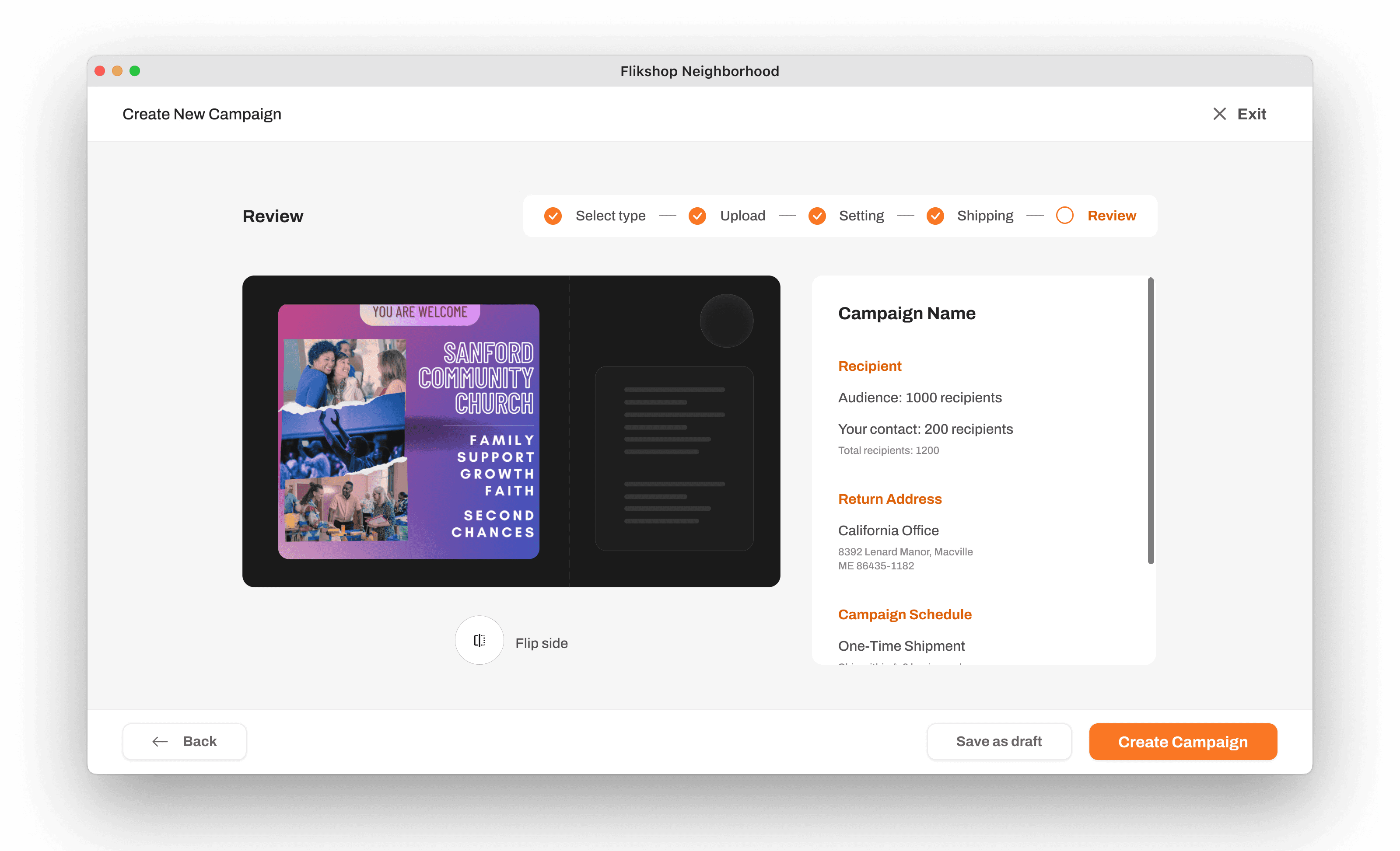
  • 為 Flikshop Neighborhood 此新產品建立完整架構與使用者流程

  • 製作可互動的MVP並執行3輪使用者測試以蒐集使用者回饋

背景

串連受者與家庭 — 持續擴大的影響力
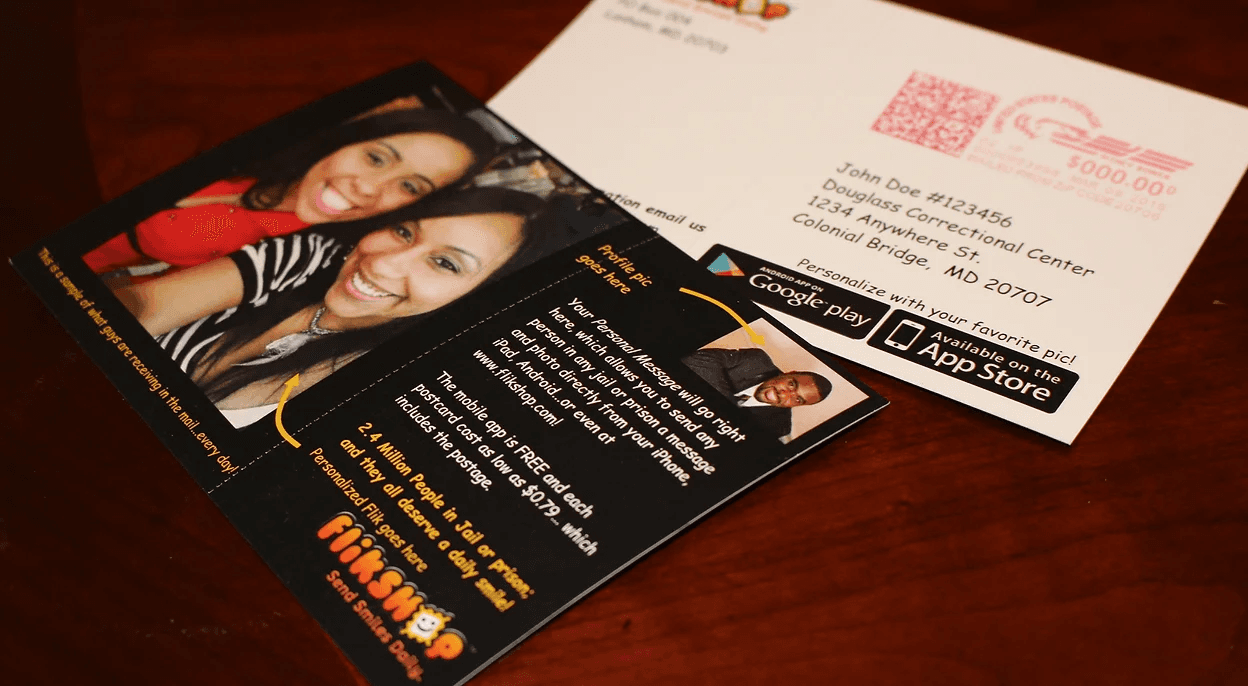
Flikshop 致力於透過信件幫助家庭與在獄中的親人保持聯繫,已達到降低再犯率的最終目標。由於在獄中無法使用網路,受刑人往往與科技快速發展的世界脫節,這段孤立時光也容易導致他們的社會紐帶斷裂。種種因素都讓出獄後的回歸之徒困難重重。因此,Flikshop 開發了一款手機 app,讓使用者可以向在獄中的親友寄送明信片和照片。

Flikshop 致力於透過信件幫助家庭與在獄中的親人保持聯繫,已達到降低再犯率的最終目標。由於在獄中無法使用網路,受刑人往往與科技快速發展的世界脫節,這段孤立時光也容易導致他們的社會紐帶斷裂。種種因素都讓出獄後的回歸之徒困難重重。因此,Flikshop 開發了一款手機 app,讓使用者可以向在獄中的親友寄送明信片和照片。

新產品

Flikshop Neighborhood

在與超過85,000名受刑人與其親友建立聯繫後,Flikshop的下一個目標是利用長年累積的信任,擴大影響範圍,將社區、教育機構和公民團體也納入Flikshop打造的「Neighborhood 社區」。在社區中人們可以互相分享資源與工作機會,讓受刑人的社會回歸之路走得更安穩。

這樣的關係並不是單向的,對於機構團體而言,Flikshop的名單也能幫助他們找到更精準的客群來服務。在 Flikshop Neighborhood 中,關係是互相扶持的。

挑戰

初版原型的問題
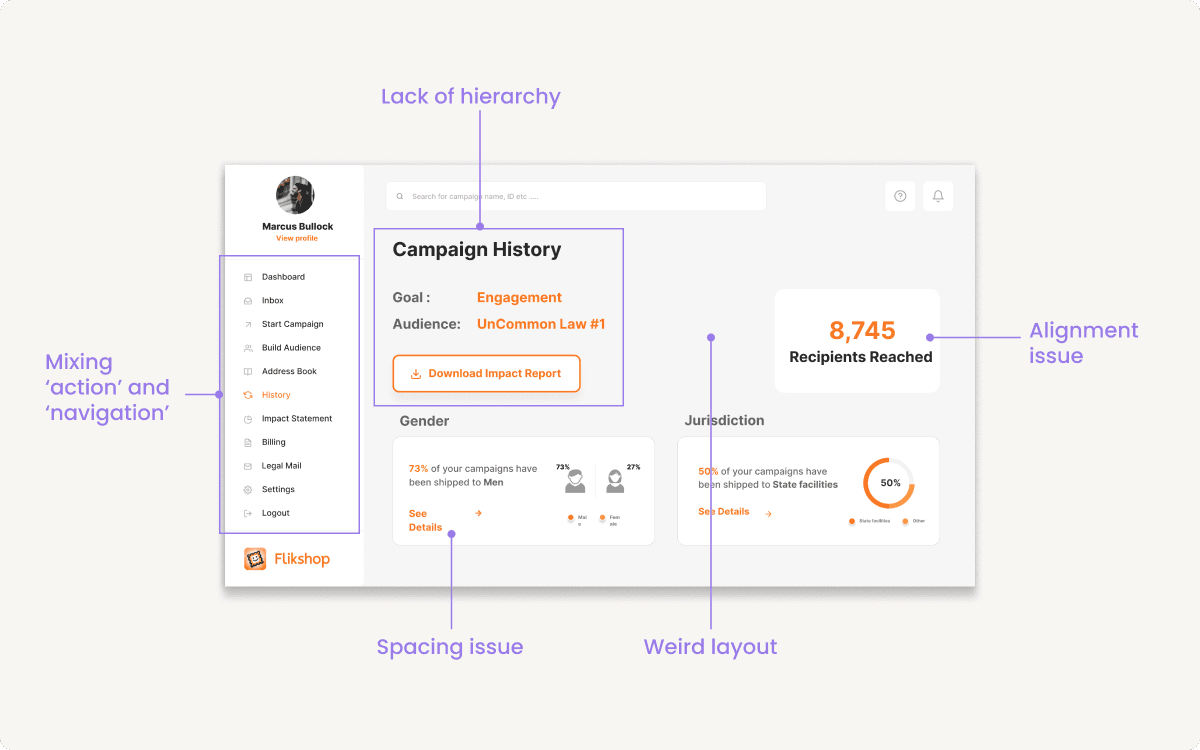
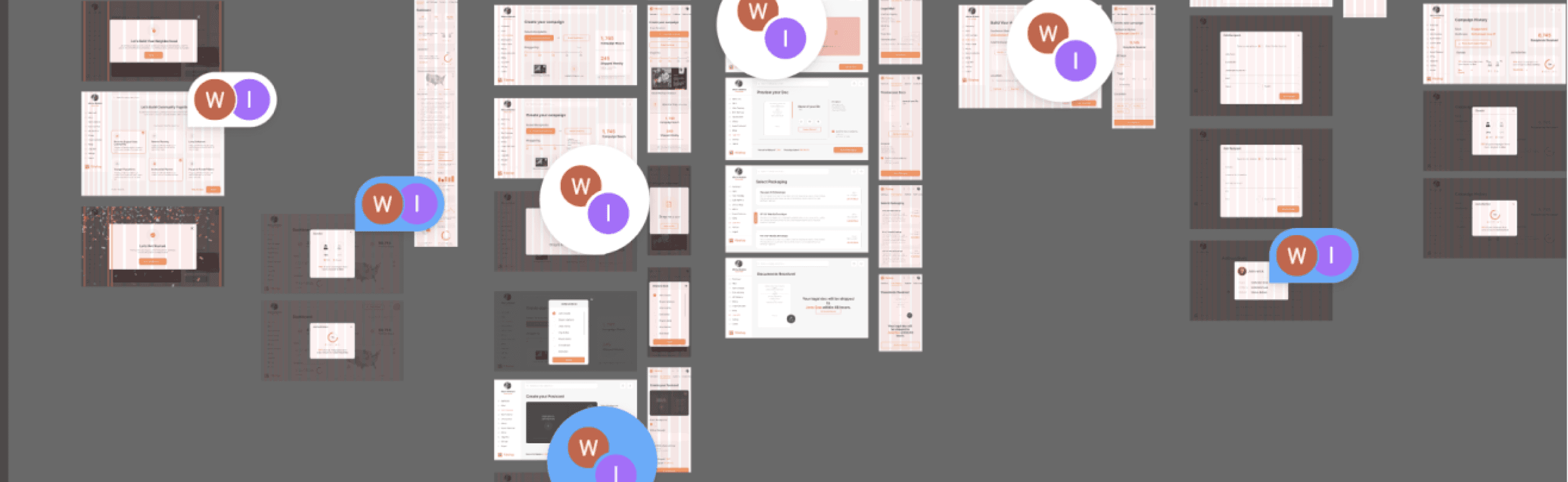
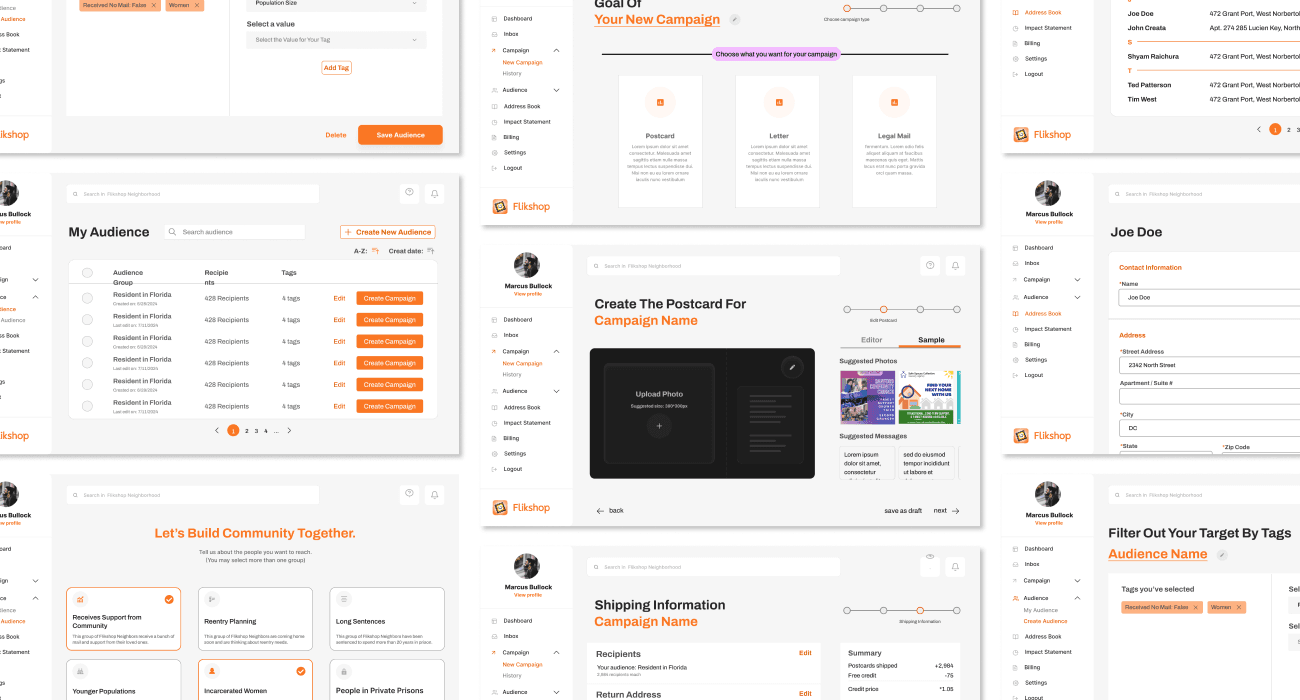
當我接到這個專案時,前一位設計師其實已經設計了初步的原型。但許多頁面都有使用者流程斷裂、指引不清楚的問題。而且UI 設計的部分也有許多明顯的問題。如右圖所見,初稿設計並沒有將元件模組化,物件也大大小小散落各處。最重要的是,我被告知希望能「儘快推出一個能互動的原型」,因為這個專案已經卡在待辦事項中一年了。

當我接到這個專案時,前一位設計師其實已經設計了初步的原型。但許多頁面都有使用者流程斷裂、指引不清楚的問題。而且UI 設計的部分也有許多明顯的問題。如右圖所見,初稿設計並沒有將元件模組化,物件也大大小小散落各處。最重要的是,我被告知希望能「儘快推出一個能互動的原型」,因為這個專案已經卡在待辦事項中一年了。

專案目標

專案目標

經過多輪跨團隊討論,我們決定採用 MVP (Minimum Viable Product) 策略,優先聚焦於編輯卡片、寄送資訊及帳單等核心功能以確保產品快速落地。針對其餘延伸需求,我與產品經理共同梳理出完整的 Product Roadmap (產品開發路線圖)。因此,我在此專案的首要目標轉化為:

我們如何

「建立一個最小可行產品,讓使用者可以計送明信片和信件、完成付款,並檢查寄送結果。」

Process

Design Process

Design Process

01

Skipped the user interview and learned from best practices

Due to the tight schedule, I didn't get the chance to conduct user research. However, since my goal for the project was to build a minimum viable product, I decided to learn from best practices to fill in the gaps in the user flow. I researched other online marketing and direct mail providers, focusing on the design of key features like campaign creation, shipping, and contact management.

02

Mapped out the user flow & wireframe

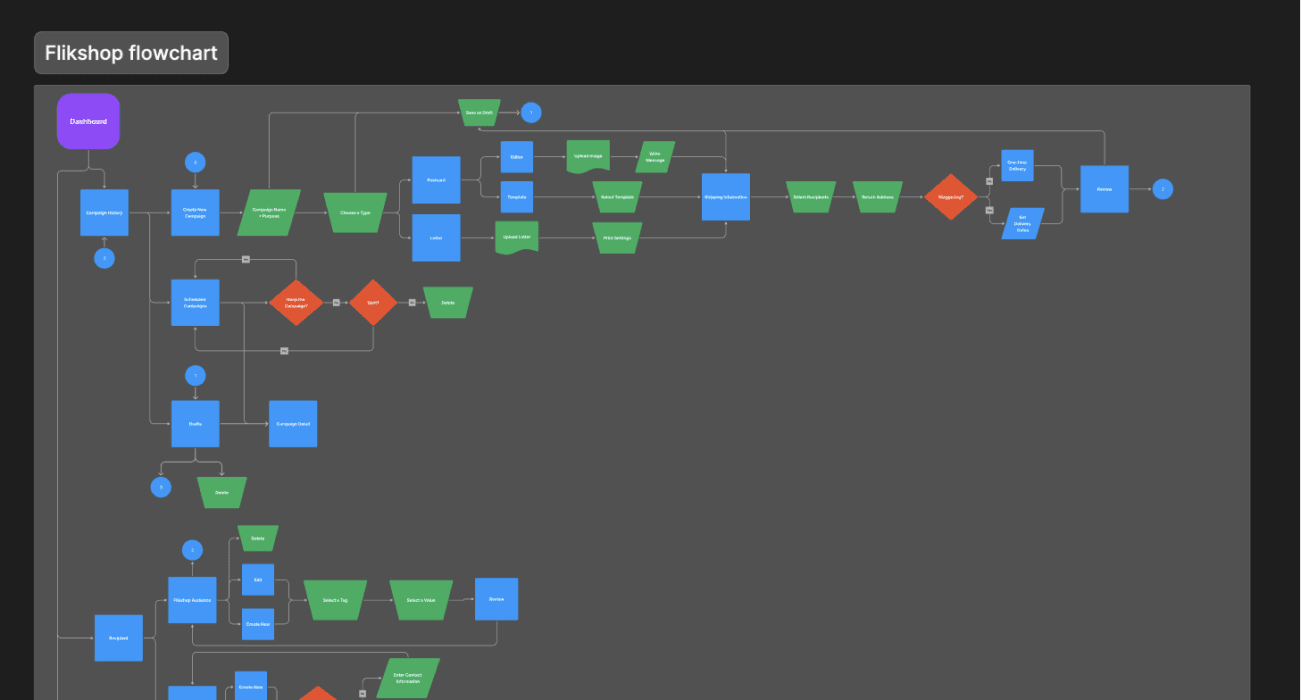
Using the competitor study I compiled, I mapped the user flow into a flowchart, which gave me a clearer view of the pages that needed to be filled. To further visualize the ideas, I also created wireframes based on the new user flow. The flowchart and wireframes also proved helpful in discussions with the PM and the CEO.
03

Built a functional prototype as a team

Midway through the project, I was assigned a new PM who also took on some of the design responsibilities. We collaborated to turn the wireframe I created into a high-fidelity prototype, providing feedback on each other's designs through regular meetings.

Competitive analysis

The nuances that make design user-friendly

The nuances that make design user-friendly

Besides focusing on the overall user flow, I also paid close attention to the nuances of how competitors design their UI/UX — to create an experience that is intuitive, efficient, and conveys a sense of trust. These three factors are particularly important because we not only want to ensure that users can deliver their campaigns seamlessly, but also foster a sense of identity as part of the Flikshop Neighborhood.
Provide confirmation

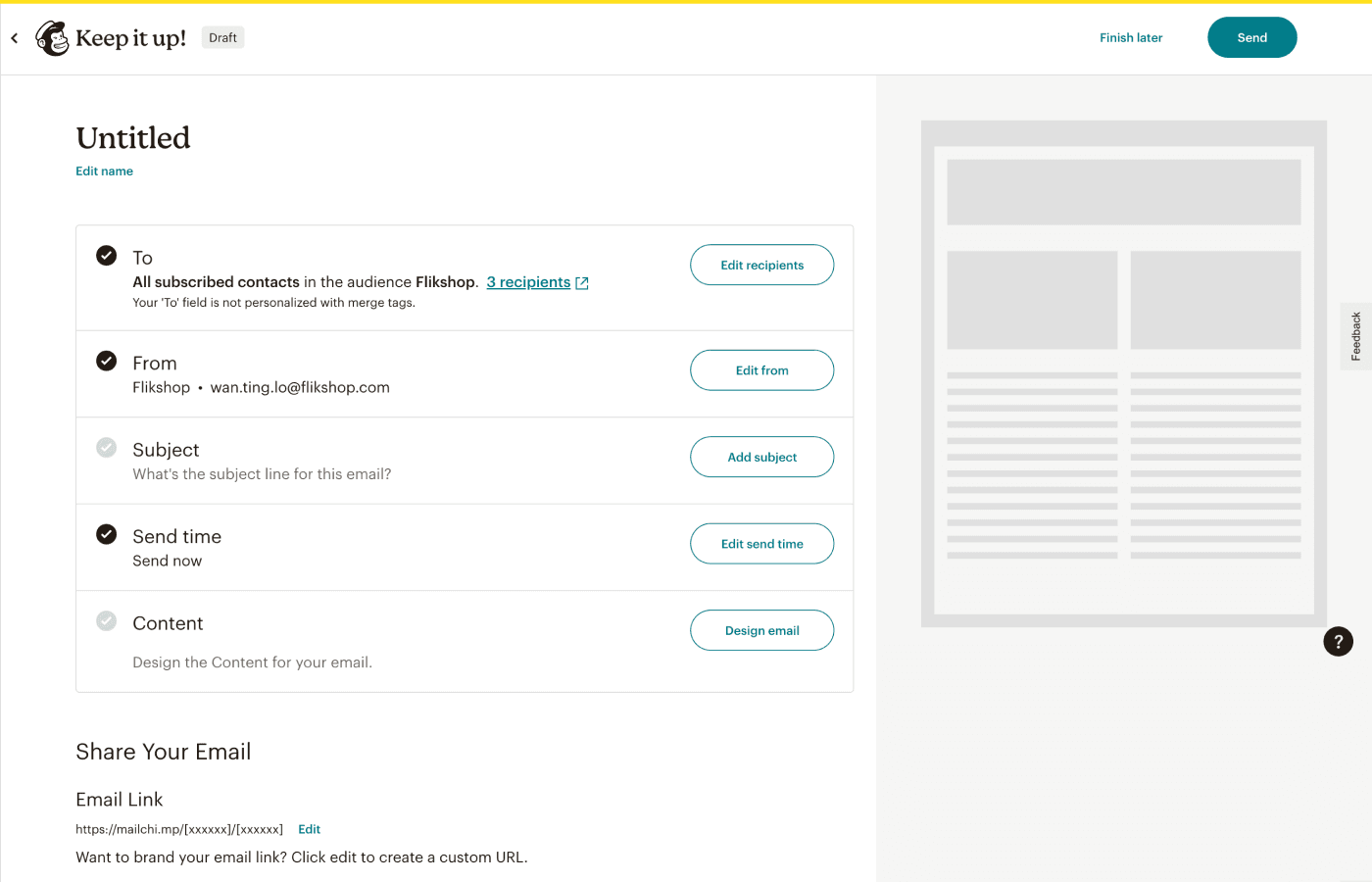
It's important to inform users of the outcomes of their actions and prompt them to double-check. For example, once users enter the shipping information, the status will update accordingly on Mailchimp's shipping page.

It's important to inform users of the outcomes of their actions and prompt them to double-check. For example, once users enter the shipping information, the status will update accordingly on Mailchimp's shipping page.

Support bulk actions

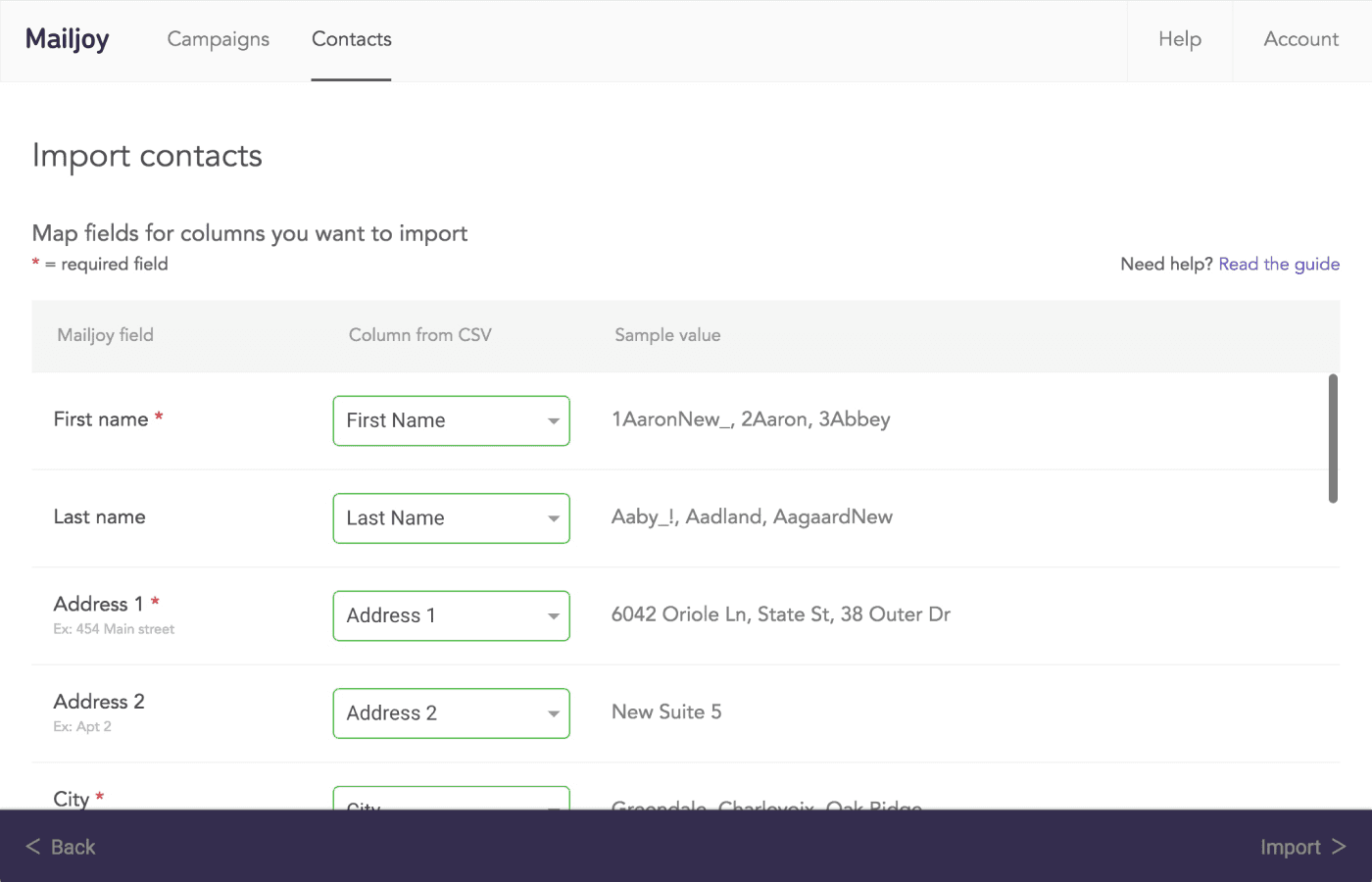
Bulk actions allow users to save time on repetitive tasks, thereby improving efficiency. Contact information and history records are two common areas where interfaces are designed to support bulk actions.

Bulk actions allow users to save time on repetitive tasks, thereby improving efficiency. Contact information and history records are two common areas where interfaces are designed to support bulk actions.

Let user be in charge

Users have to purchase Flikshop Credits to pay for campaigns, but the old prototype lacked a clear explanation of how each campaign was charged. Yet we found it's common to show detailed billing information. Some competitors even provide real-time shipping status updates.

Users have to purchase Flikshop Credits to pay for campaigns, but the old prototype lacked a clear explanation of how each campaign was charged. Yet we found it's common to show detailed billing information. Some competitors even provide real-time shipping status updates.

Design Iteration

Create Campaign

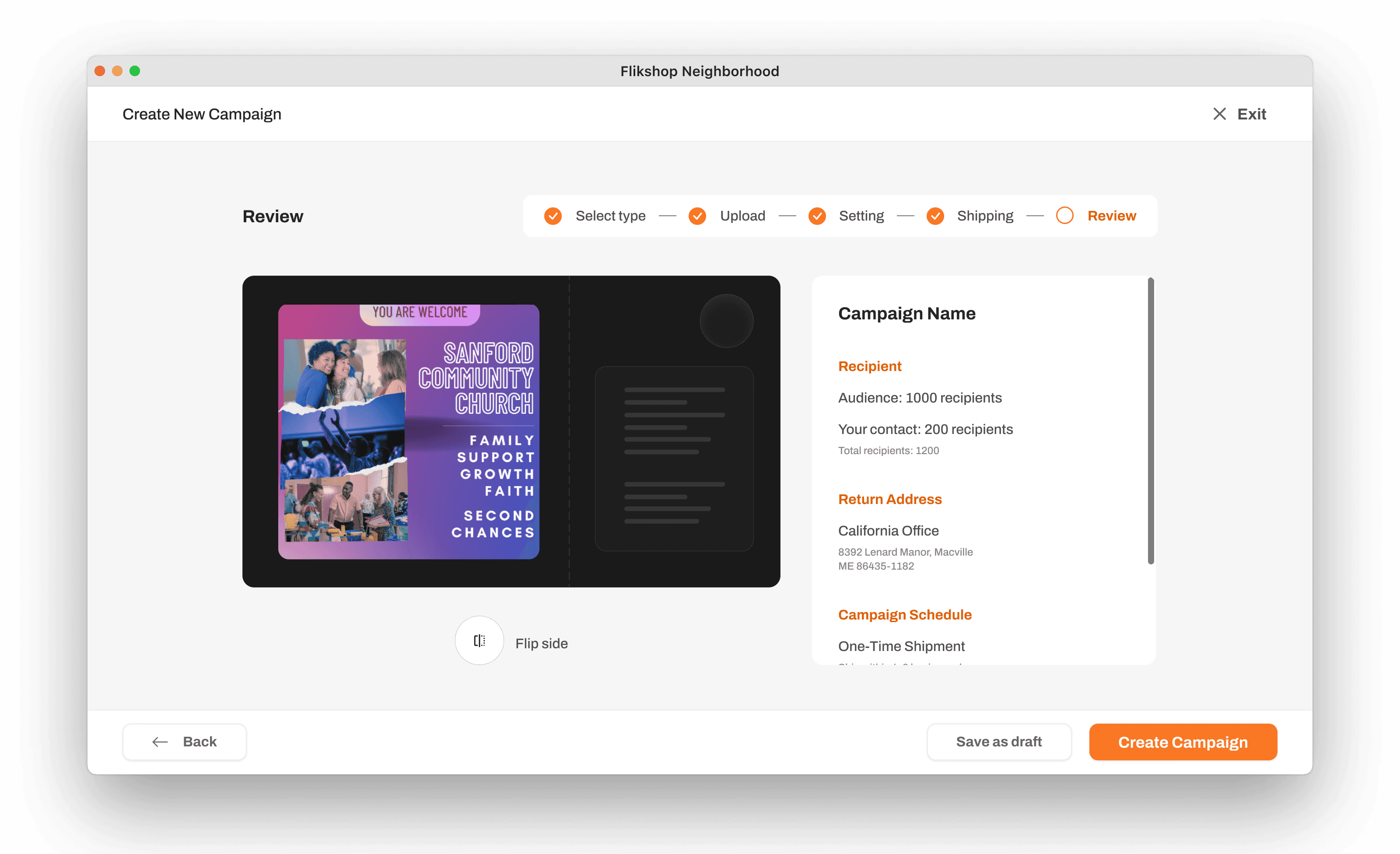
With Flikshop Neighborhood, users can create a postcard and mail it. We designed this feature based on years of experience delivering mail to prisons and jails.

For example, to prevent overwhelming the mail system and ensuring timely delivery, the system will recommend staggering the mail when necessary. This means to divide a large recipient list into smaller batches and sending them sequentially rather than all at once.

With Flikshop Neighborhood, users can create a postcard and mail it. We designed this feature based on years of experience delivering mail to prisons and jails.

For example, to prevent overwhelming the mail system and ensuring timely delivery, the system will recommend staggering the mail when necessary. This means to divide a large recipient list into smaller batches and sending them sequentially rather than all at once.

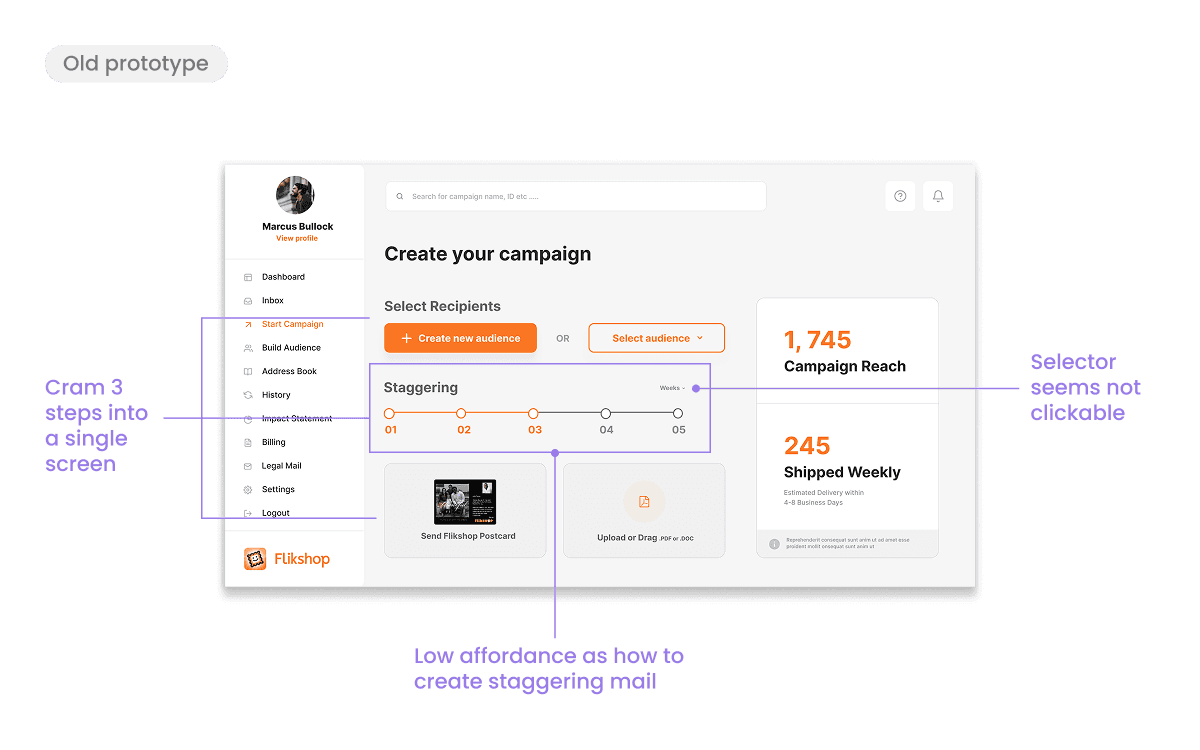
A better way to create staggering mail
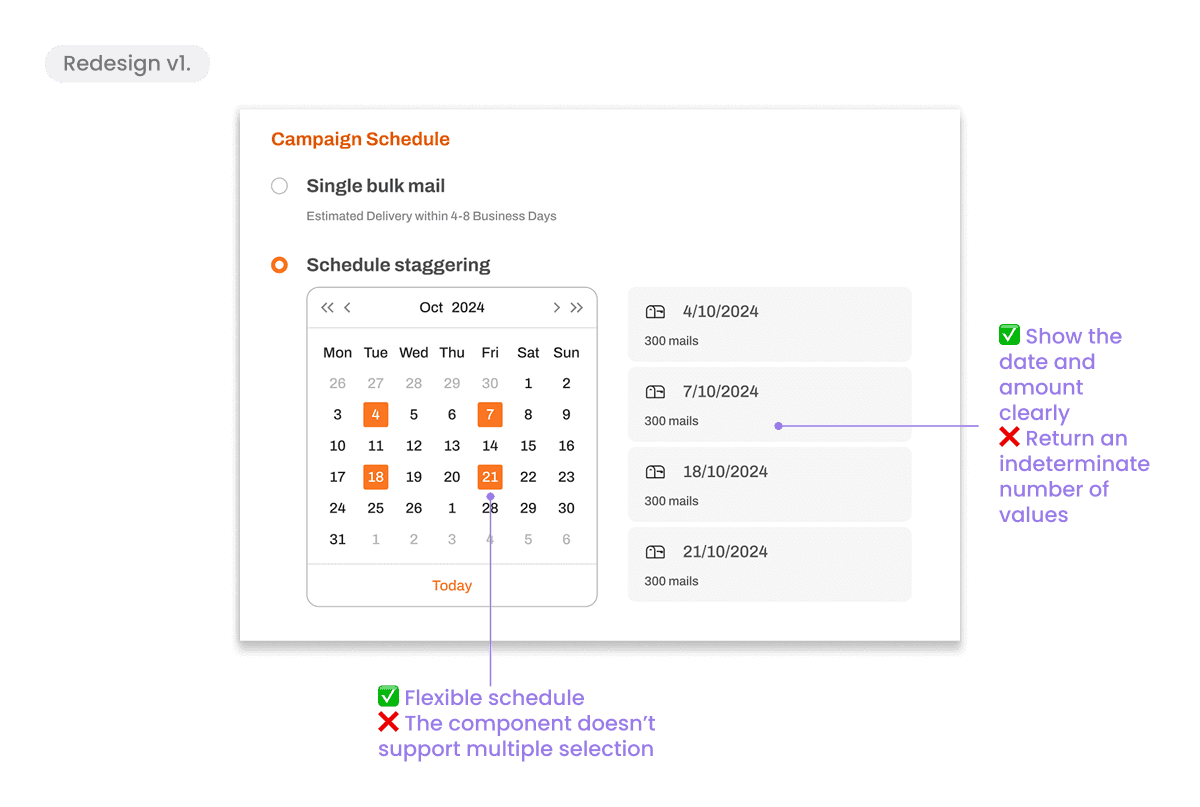
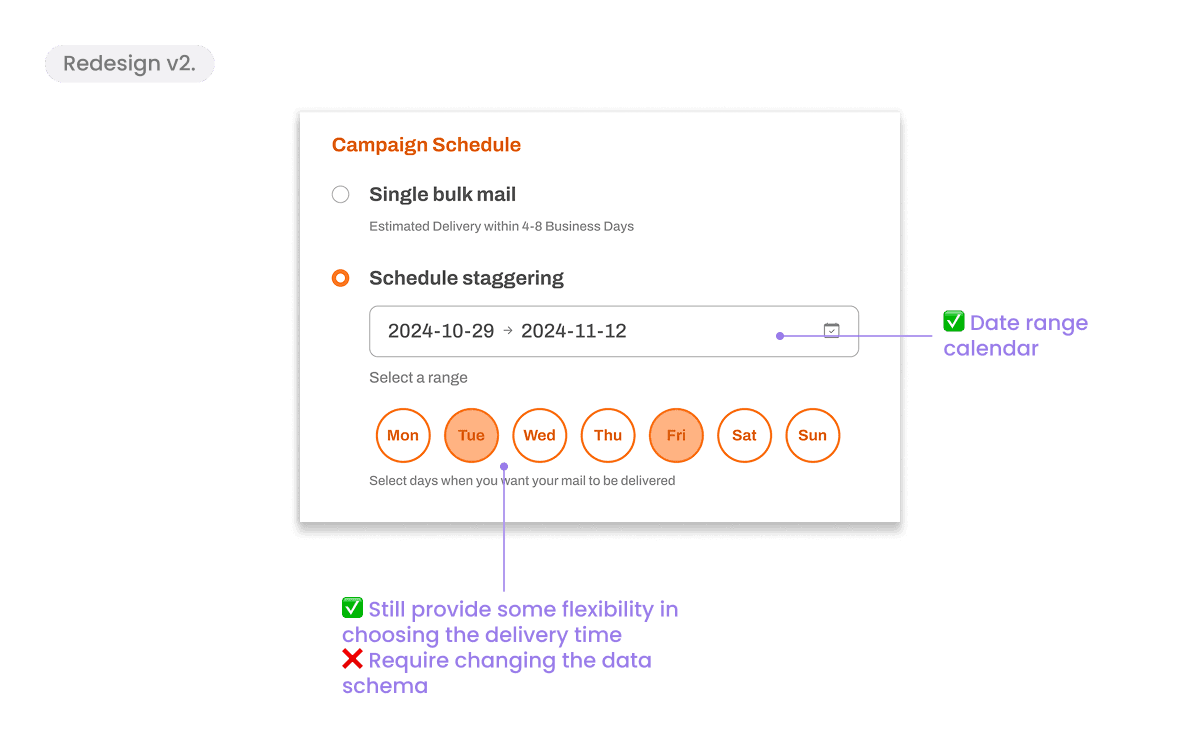
When designing how to help users split a campaign, my initial idea was to create something similar to a calendar where users could schedule shipments by choosing the exact date.

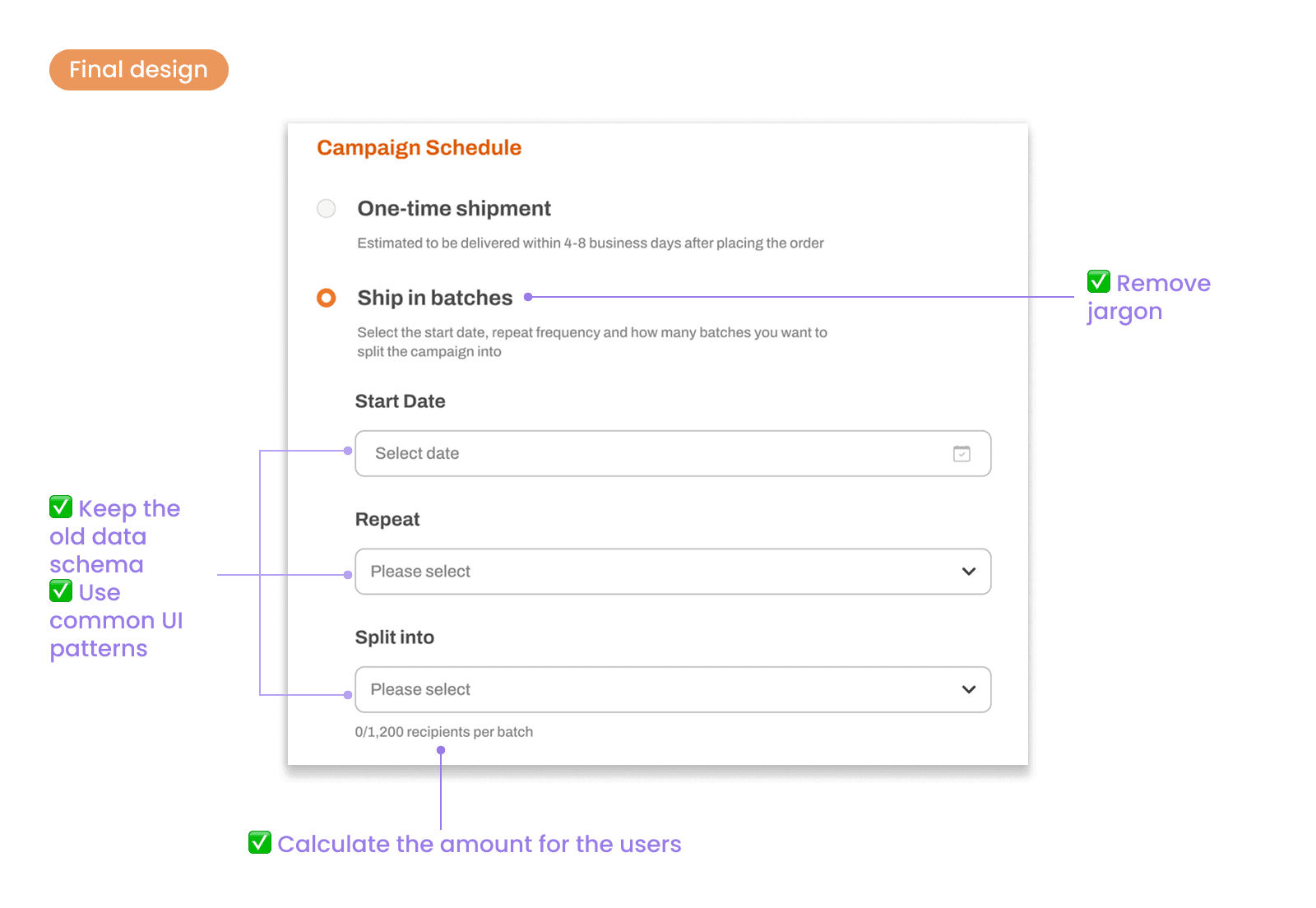
After discussing with the dev team, I realized the difficulties to implement the changes. Our calendar component didn’t support multi-selection, and the back-end would require new fields and a logic rewrite. So I went through rounds of iteration on this feature.

When designing how to help users split a campaign, my initial idea was to create something similar to a calendar where users could schedule shipments by choosing the exact date.

After discussing with the dev team, I realized the difficulties to implement the changes. Our calendar component didn’t support multi-selection, and the back-end would require new fields and a logic rewrite. So I went through rounds of iteration on this feature.

Design Philosophy

Balancing user needs with business goals

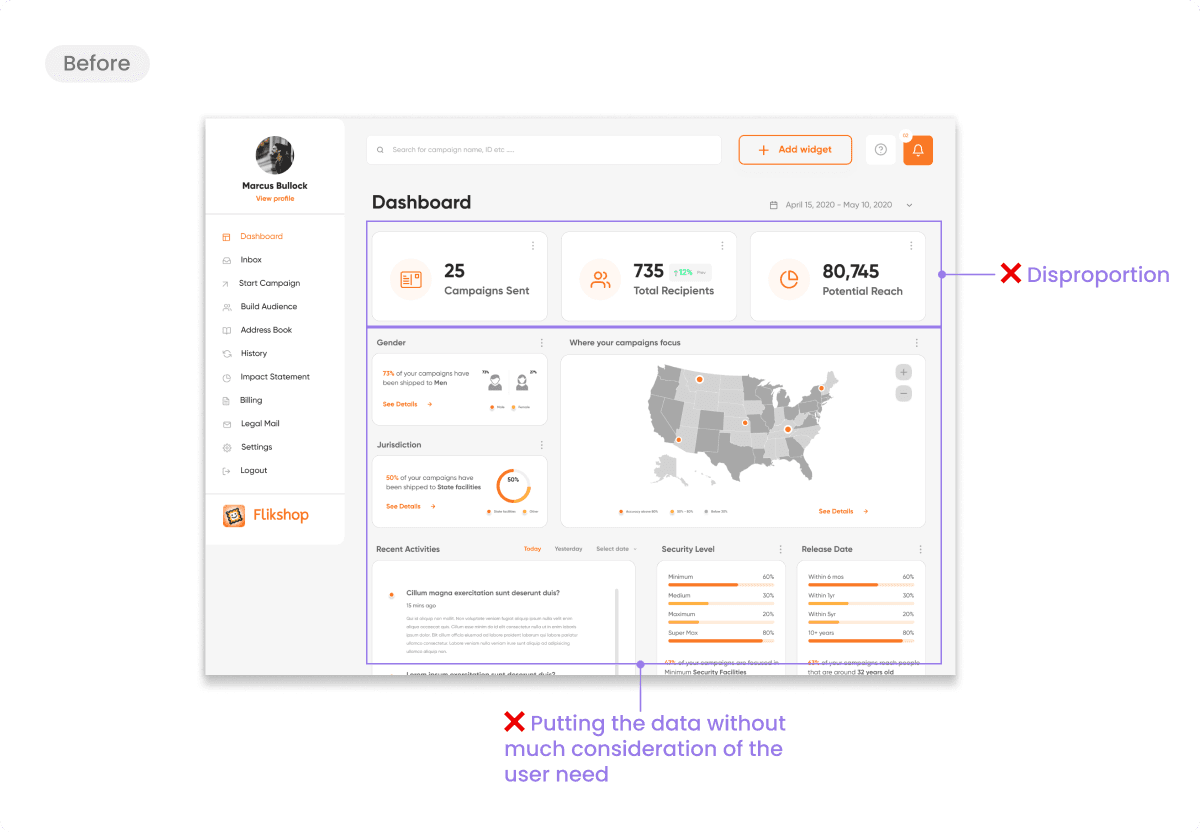
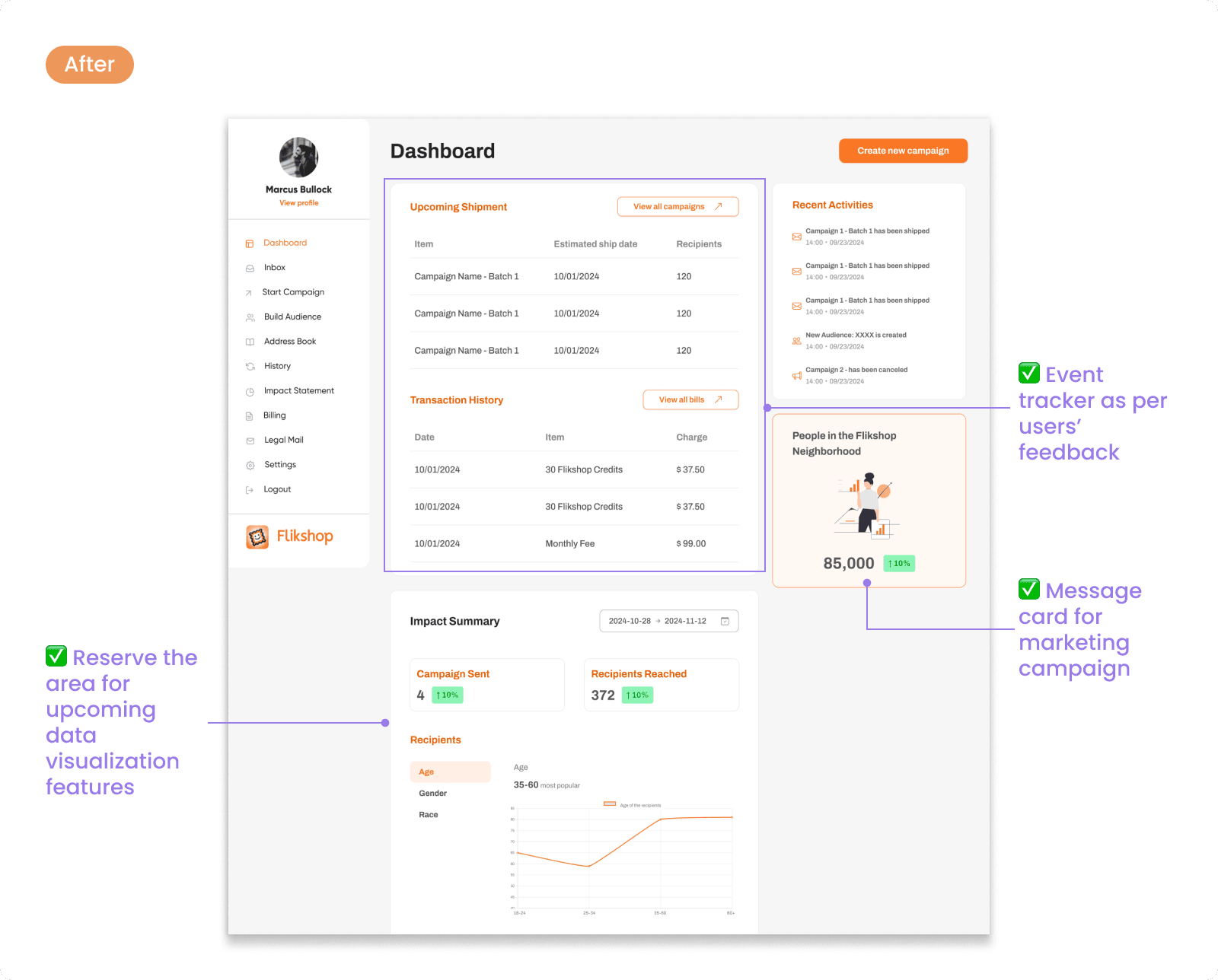
As a product designer, I worked closely with the CEO throughout the entire process to ensure that the design not only addressed users' needs but also served the business goals. Maintaining this balance was particularly important when I designed the dashboard, as it forms the first impression users get when they log in.

The former designer initially came up with a concept that emphasized Flikshop's ability to provide data, but he didn't take account of what the users actually wanted. To avoid repeating the same mistake, we spoke with several pilot users with our design. This gave us a better understanding of their expectations.
Reflection

Take-away

Don’t give up on advocating for user interviews

While the table research helped, I felt we were missing the vital perspective from the actual users. Despite tight schedule, I kept advocating for usability testing. I explained how crucial real user feedback is for shaping a successful product. Midway through the project, I convinced the CEO to connect us with a NGO worker.

This led to a usability test and interview, providing insights that we couldn't have gathered otherwise. The feedback helped us improve our design and map out future work. This experience taught me to never give up on finding ways to connect with the users, even when it seems difficult.
歡迎與我聯繫

若你喜歡這些專案,歡迎將你的需求寄至以下信箱。期待一起創造有趣的設計!

信箱:janet.wan.ting.lo@gmail.com

歡迎與我聯繫

若你喜歡這些專案,歡迎將你的需求寄至以下信箱。期待一起創造有趣的設計!

信箱:janet.wan.ting.lo@gmail.com